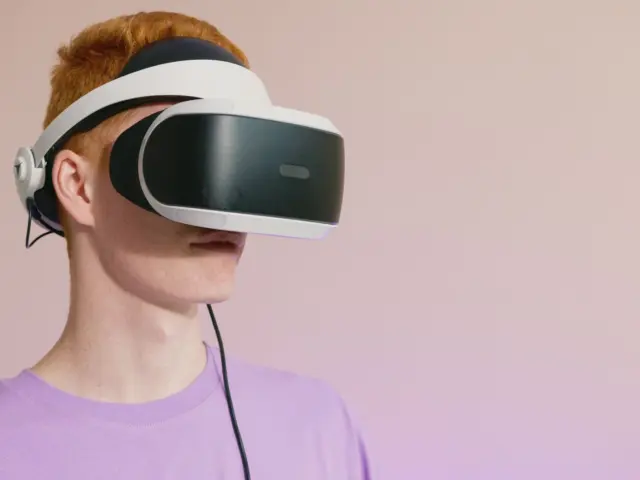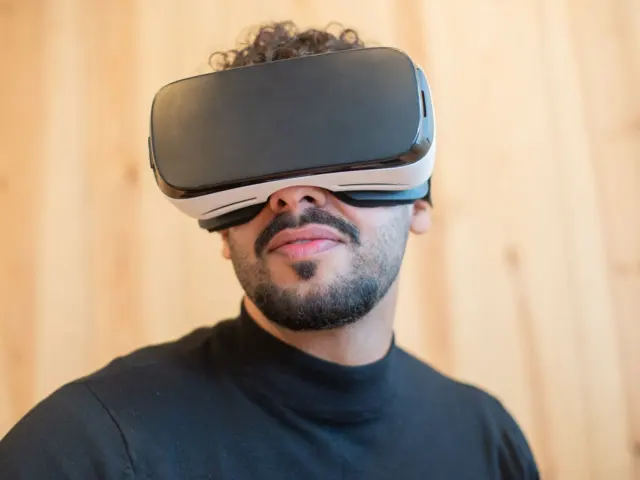
VR motion sickness is nausea, dizziness and eye strain caused by a mismatch between what the eyes see in a headset and what the inner ear feels. Two leading theories explain it, and several settings and habits reduce it.
The wider buying picture, including comfort and optics, is covered in the guide to the vr headset category.
What VR motion sickness is
Research on head-mounted VR for gaming dates back to the early 1990s, according to the Wikipedia entry on virtual reality sickness, so the problem is older than the current consumer headset wave. The symptoms overlap with ordinary motion sickness: queasiness, cold sweat, headache, blurred vision and a heavy, tired feeling behind the eyes. Clinicians group them into nausea-type symptoms and oculomotor symptoms, the second group being the eye strain and focusing trouble that appear after long sessions.
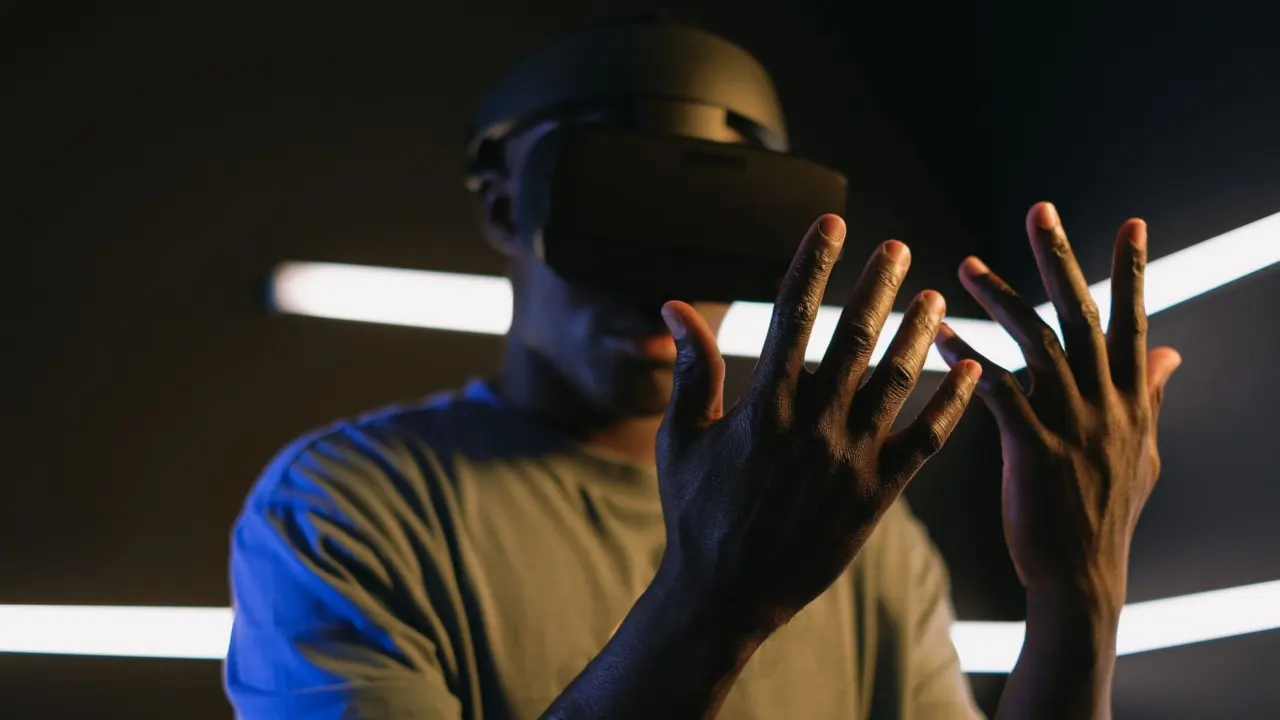
What makes VR distinctive is that the body stays still while the picture moves. In a car or on a boat, the inner ear reports real movement. In a headset, a character can sprint, fall or fly while the user sits on a sofa, and the brain receives two stories that do not agree. Ordinary motion sickness is defined by real or perceived motion, and virtual reality supplies the perceived part without the real part.
Susceptibility differs from person to person. The Wikipedia entry on motion sickness lists pregnancy, migraines and Ménière’s disease as risk factors, and it reports that women are more susceptible than men. The VR sickness entry adds that surveys indicate a large share of people never develop “VR legs”, though developers argue that the individual game matters as much as the person.
Sensory conflict and postural instability
Two theories dominate the explanation. Sensory conflict theory is the older and the more widely used framework, and it holds that sickness occurs when self-motion perceived through vision disagrees with the signals from the vestibular system, the balance organs of the inner ear, and from the body’s sense of position.
The second explanation is postural instability theory. It proposes that motion sickness arises because the body adapts poorly to an unusual coupling between visual stimuli and motor coordination. Its main selling point is predictive: characteristic markers of unsteady posture appear before symptoms do, so swaying more than usual can warn that sickness is coming. The theory also accounts for cases where people felt fine despite a strong sensory conflict.
A third idea, neural mismatch theory, says the brain compares what it sees with what experience has taught it to expect, and that a contradiction with those expectations is the primary cause. The practical lesson is the same across all three: conflict between expected and delivered motion is what drives the sickness, so reducing that conflict is what helps.
Technical causes inside the headset
The same Wikipedia entry names several technical aspects that can induce sickness: mismatched motion, field of view, motion parallax and viewing angle. Field of view is the best studied. Generally, increasing the field of view increases the incidence of simulator sickness symptoms, although the relationship is curvilinear and symptoms approach an asymptote for fields of view above 140°. A wider view is more immersive, but it also puts more of the user’s peripheral vision into motion, and that is where the conflict is strongest. The sibling guide on vr headset field of view explains how lens design sets those limits.
Refresh rate and delay matter as well. When the screen refreshes more slowly than the brain processes images, the user perceives glitches, and that disconnect worsens sickness. Head tracking that lags behind a real head turn produces the same effect, because the world seems to drag behind the body.
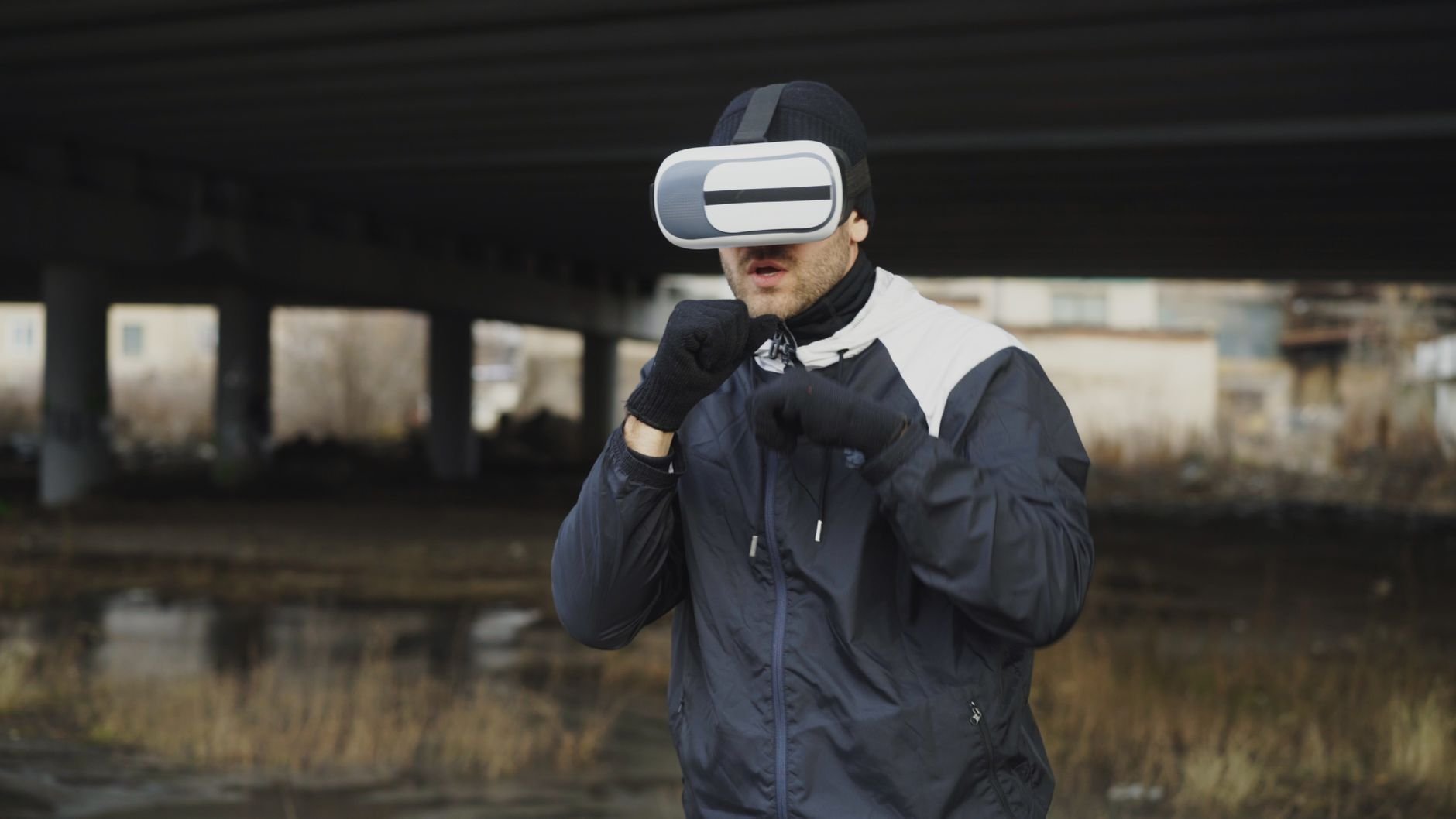
Time and posture count too. Time spent immersed contributes to symptoms because fatigue builds, and oculomotor symptoms are the most common result of long sessions. An extreme downward viewing angle, as opposed to a forward one, has been shown to increase sickness markedly in virtual environments. Interface placement therefore matters: menus and tools that force the user to look steeply down are a quiet source of discomfort.
How to reduce VR motion sickness
The most reliable fix is gradual adaptation. The Wikipedia entry on VR sickness lists gradual adaptation among the methods to alleviate symptoms, and the motion sickness entry calls habituation the most effective technique, with the caveat that it takes significant time. Short sessions, with a stop at the first sign of queasiness, let the brain learn the new coupling without a bad experience that makes the next session worse.
- Choose comfortable software. Choosing VR games designed to minimize motion sickness can reduce nausea and improve the experience. Teleport movement, snap turning and a fixed cockpit or nose reference are the usual comfort options.
- Avoid artificial speed changes. Developers point to changes in speed, walking up stairs and jumping as the actions most likely to cause trouble, so start with titles that move the player gently.
- Keep the frame rate steady. A display that keeps up with head movement removes one of the technical triggers named above. Lower graphics settings are better than a stuttering picture.
- Set up the headset properly. A correct lens spacing and a sharp image reduce the eye strain side of the problem.
- Stay in control. Moving under your own power, rather than being carried by the game, gives the vestibular system the cues it expects.
Professional use follows the same logic. People who spend long hours in headsets for design work usually pick stable, low-motion workflows, a theme explored in the guide to a vr headset for 3d modeling, where the user mostly stays put and moves objects rather than the viewpoint.
Remedies and emerging techniques
The motion sickness entry says three types of medications are sometimes prescribed for ordinary motion sickness: antimuscarinics such as scopolamine, H1 antihistamines and amphetamines. Antihistamines are often effective at reducing the risk before motion starts, but their effectiveness once symptoms have begun has not been well studied. Anyone considering medication for regular VR use should ask a pharmacist or doctor, since drowsiness and other side effects are common.
Non-drug measures are weaker. The same entry suggests that bands or ginger may be nothing more than a placebo, although a strong placebo effect can still bring relief. Research continues on technical remedies. Galvanic vestibular stimulation, which creates the illusion of motion by electric stimulation of the vestibular system, is being explored to remove the visual-vestibular mismatch. Another promising approach uses LCD shutter glasses that create stroboscopic vision at 4 Hz with a dwell of 10 milliseconds, and a stable artificial horizon inside the headset has been tested for use on moving vessels.
None of these are a substitute for good design and gradual exposure. If symptoms persist after several weeks of careful use, or if dizziness lasts long after removing the headset, medical advice is the sensible next step.
Frequently asked questions
What causes VR motion sickness?
What causes VR motion sickness?
Sensory conflict theory attributes it to visual input that disagrees with vestibular and body signals, while postural instability theory points to poor postural adaptation, according to the Wikipedia entry on virtual reality sickness.
Does a wider field of view make it worse?
Does a wider field of view make it worse?
Generally yes. Symptoms rise with field of view, but the relationship is curvilinear and approaches an asymptote above 140°, per the same entry.
Do people get used to it?
Do people get used to it?
Most can, through habituation, which the Wikipedia entry on motion sickness names as the most effective technique, though it takes significant time. A minority of users, particularly women according to surveys cited there, report never developing VR legs.
Does ginger help?
Does ginger help?
The evidence is weak. The Wikipedia entry on motion sickness says ginger and bands may be nothing more than a placebo, though a strong placebo effect can still help.