VR headset lenses come in two main designs: Fresnel lenses, cheap and ridged, and pancake lenses, which fold light inside a slim stack. Pancakes make headsets about 110° wide and far slimmer, while Fresnel keeps costs low.
Lens choice shapes comfort, clarity and price more than almost any other part of a vr headset, so the trade-offs are worth understanding before buying.
How Fresnel lenses work in VR
A Fresnel lens replaces a thick curved piece of glass or plastic with a series of concentric ridges, each one a thin slice of the curve. The Meta Quest 2 carries a pair of them, and the design dominated consumer VR for years because it is light for its focusing power and inexpensive to mold in plastic.
The ridges also let designers use thin molded plastic instead of heavy glass. A single-piece Fresnel element weighs a fraction of an equivalent solid lens, which is why early standalone headsets could be built at consumer prices. The trade is that the ridged surface can never match the smooth continuous curve it imitates, so a small amount of optical quality is given up in exchange for weight and cost savings.
The Tech Tactician comparison puts the appeal bluntly: “Fresnel lenses are first and foremost the cheaper option, and for years they were the most popular one in VR headsets.” That price advantage is why Meta’s budget Quest 3S still uses them.
The ridges carry a cost. Each groove edge scatters light, producing the glare streaks that players call god rays, most visible as pale beams around bright objects on dark backgrounds such as menus and space scenes. Fresnel lenses also give a smaller sweet spot, the central zone where the image is sharpest and least distorted. Look slightly off-centre and the picture softens.
Because the lens must sit a long distance from the display to focus, Fresnel headsets also stick out from the face. That front-heavy shape shifts weight forward and makes long sessions more tiring.
How pancake lenses fold the light path
Pancake optics achieve effective focal lengths 3x longer than their physical depth, according to the VR & AR Wiki entry on pancake lenses. The trick is folding: light bounces back and forth inside the lens stack instead of travelling straight through.
A typical assembly starts with an LCD or OLED panel. A polarizer and a quarter-wave plate turn the emitted light into circularly polarized light. A curved half-mirror, reflecting about half the light and passing the rest, sends it back toward a reflective polarizer, which bounces it forward once more. Only after this round trip does the light exit toward the eye.
The idea is older than consumer VR. The VR & AR Wiki traces polarization-based folded optics to flight-simulator displays, and records that the VR breakthrough came in 2015, when eMagin demonstrated the first VR pancake headset prototype. Mass-market headsets with the technology arrived years later, once plastic pancake stacks became practical to manufacture.
Supply is concentrated. The same wiki names Genius Electronic Optical as the world’s largest pancake lens supplier for Apple, Meta and Sony, which shows how much of the market now relies on a small number of specialist factories. Each lens is a stack of precisely coated films bonded to curved plastic or glass, so yields and tolerances shape both price and availability.
Pancake design also introduces a failure mode Fresnel never had: if light leaks through the half-mirror without taking the full folded path, a faint ghost image appears offset from the real one. Careful polarizer coatings keep that leakage low, but it is the reason alignment and coating quality matter so much in this optic.
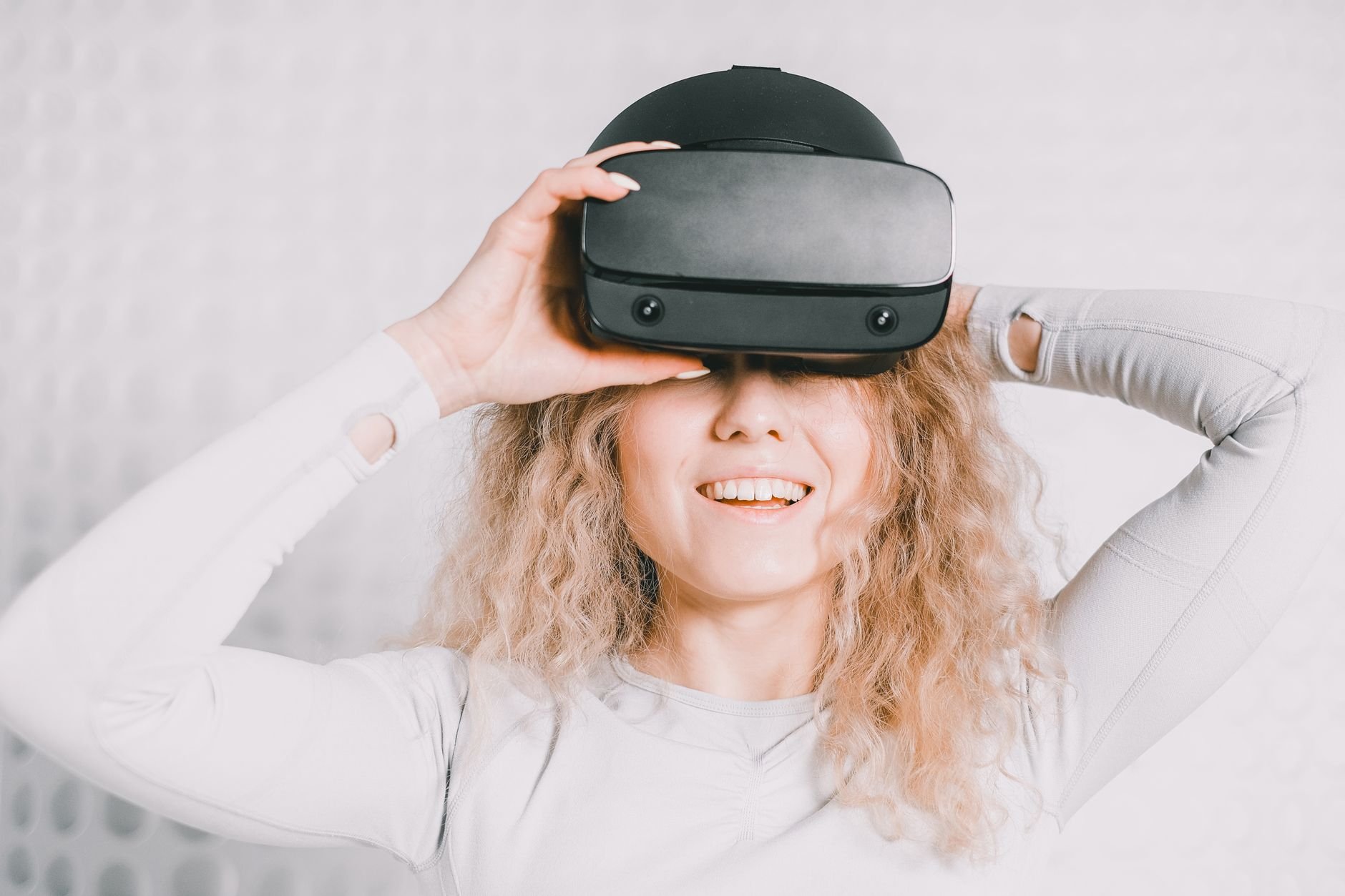
What pancake lenses change for the wearer
The most visible effect is shape. With the optical path folded, the display can sit much closer to the lens, so the headset becomes shallower and sits nearer the face. Less front-heavy leverage means less neck strain over a long session.
Optical quality improves too. Tech Tactician notes that the sharp sweet spot is noticeably larger on pancake headsets, and that the Quest 3 with pancake lenses reaches about 110° of horizontal field of view, against about 96° for the Fresnel-based Quest 3S and Quest 2. Readers who want to see how that angle is measured can read the guide to vr headset field of view.
Edge clarity also benefits. Text and interface elements away from the centre stay legible, which matters for productivity use. This pairs with panel density: sharper lenses reveal more of what the screen can show, a topic covered in the explainer on vr headset resolution.
The trade-offs: light loss, cost and heat
Folding light is not free. The curved half-mirror reflects roughly 50% of the light at each interaction, and the polarizers absorb more, so only a fraction of the display’s output reaches the eye. Published estimates for pancake systems vary by design, and Meta’s own Holocake research prototype, shown in July 2022, was reported at around 10% efficiency.
To compensate, pancake headsets need brighter panels, which draw more power and produce more heat inside a sealed headset. Brighter backlights such as mini-LED are one answer, and they add cost and weight of their own.
Manufacturing is also stricter. Plastic elements must have near-zero birefringence, or stray polarization causes ghost images; Kopin filed three core patents on all-plastic zero-birefringence pancake optics in 2021. Tight tolerances explain why pancake headsets have typically cost more than Fresnel models.
- Fresnel: cheaper, efficient with light, thicker, with god rays and a smaller sweet spot.
- Pancake: slimmer, sharper across the view, wider in current Quest models, but dimmer per watt and pricier.
Which lens type suits which buyer
When choosing between the two, the gap comes down to budget, session length and use case. Players who want a low entry price and mostly play fast games may accept Fresnel glare, as the Quest 3S shows. Buyers who read text, work in VR or wear a headset for hours usually gain more from pancake optics.
Enthusiasts who care about image purity should note that the Quest 3S is still a Fresnel headset, so the ridge artifacts described above remain part of the budget experience. Those who mostly stream video or play bright, colorful games notice them least, because god rays depend on strong contrast between light and dark areas.
Glasses wearers should also check eye relief and lens spacing, since a slimmer headset does not guarantee more room. Pancake designs are likely to keep spreading as costs fall, while research such as holographic films aims to thin the optics further, though those prototypes remain lab work.
Frequently asked questions
Are pancake lenses always better than Fresnel lenses?
Are pancake lenses always better than Fresnel lenses?
No. Pancake lenses give a larger sweet spot and slimmer headsets, but they pass less light and cost more, which is why the Meta Quest 3S still uses Fresnel lenses.
What are god rays in VR?
What are god rays in VR?
God rays are streaks of scattered light caused by the ridges of a Fresnel lens, according to Tech Tactician. They show most around bright shapes on dark backgrounds.
Why are pancake headsets thinner?
Why are pancake headsets thinner?
Pancake optics fold the light path with polarization, giving effective focal lengths 3x longer than their physical depth, per the VR & AR Wiki.
Do pancake lenses widen the field of view?
Do pancake lenses widen the field of view?
In Meta’s lineup they do: Tech Tactician lists about 110° for the pancake Quest 3 against about 96° for the Fresnel Quest 3S.